



WhatsApp: +86 178 6574 8088

E-mail: jackyalum@163.com
English


WhatsApp: +86 178 6574 8088
E-mail: jackyalum@163.com
Related Products
Date: 18 Aug, 2026
Installers choosing the best GP acetoxy silicone sealant for glass installation often need one product for shower screens, windows, sanitary ware, and decorative tiles. The right acetoxy silicone sealant for ceramic tiles can reduce water ingress, while a clear silicone sealant for bathroom glass preserves the joint’s appearance. These applications depend on glass bonding, sanitary ware sealing, and a waterproof joint, together with correct acetic cure, elastomeric sealant behavior, and substrate preparation with an adhesion promoter. This guide explains where general-purpose acetoxy silicone sealant works, where it should not be used, and how to select it using technical evidence rather than advertising adjectives.
The glass and ceramic installation market is moving toward cartridge-based sealants that are easier to apply on site, produce cleaner joints, and cure without specialized mixing equipment. Contractors are also paying closer attention to substrate compatibility because a sealant that adheres well to glazed ceramic may perform poorly on porous cement board, natural stone, or certain metals.
Three trends are particularly important:
For technical reference, ASTM C920 defines performance classifications for elastomeric joint sealants, including movement capability and application requirements. ASTM C1193 provides guidance on the use of joint sealants, including joint design, surface preparation, and installation practice. European projects may also reference EN 15651, which covers sealants for façade, interior, and sanitary applications. These standards do not automatically approve every general-purpose product for every use; the product’s own technical data sheet remains essential.
Acetoxy silicone cures by releasing acetic acid, producing the familiar vinegar-like odor. This chemistry normally provides good adhesion to non-porous glass and glazed ceramic, but it can attack or corrode some metals and may be unsuitable for alkaline, porous, or cement-based materials. Dow’s silicone guidance and Sika’s sealant documentation similarly emphasize checking substrate compatibility, joint design, and product-specific limitations before installation.
A recognized sanitary-grade option for glass, glazed ceramic, and bathroom joints when the project specification calls for an established technical brand. It is best suited to professional installers who require documented performance and distributor support. Typical retail pricing varies by country and pack size, commonly around US$8–18 per 300/310 ml cartridge.
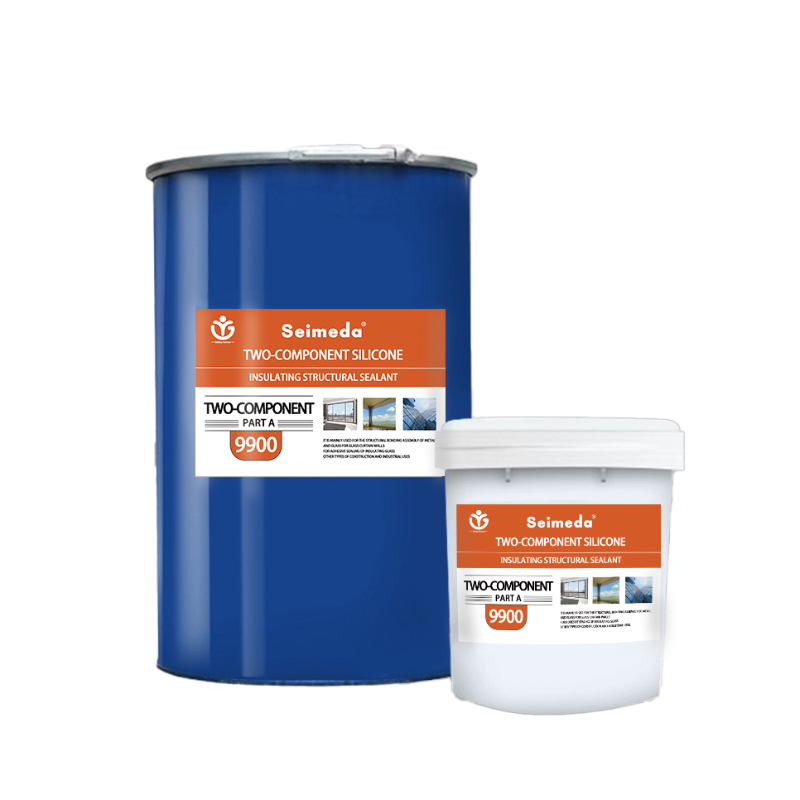
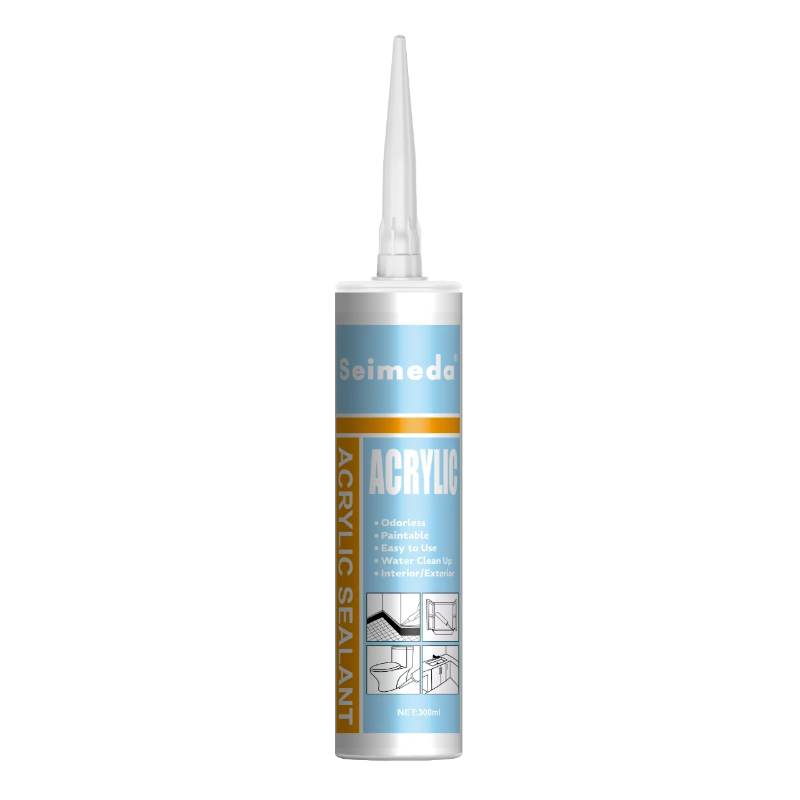
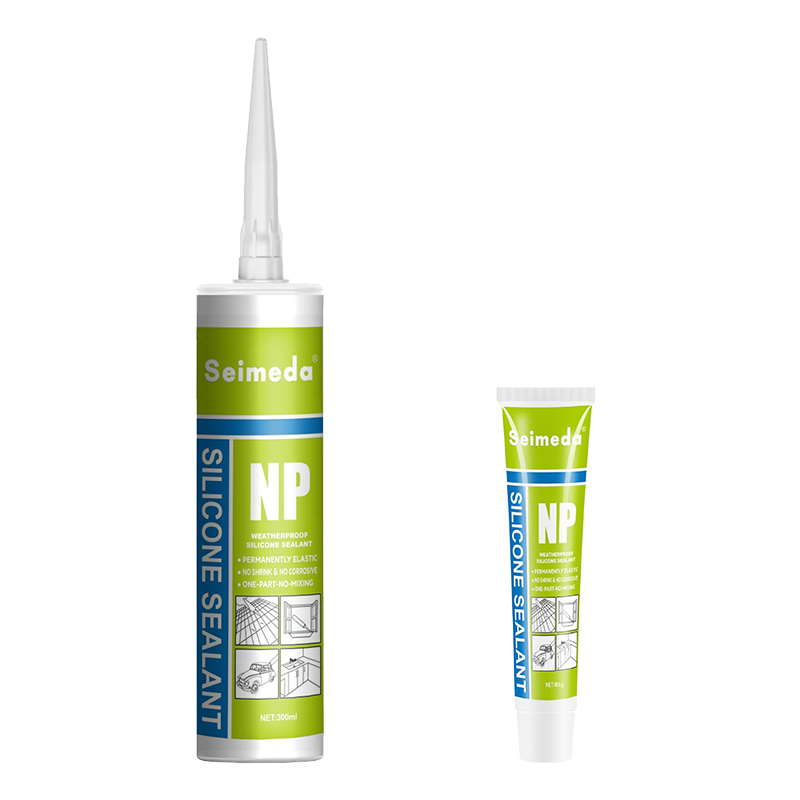
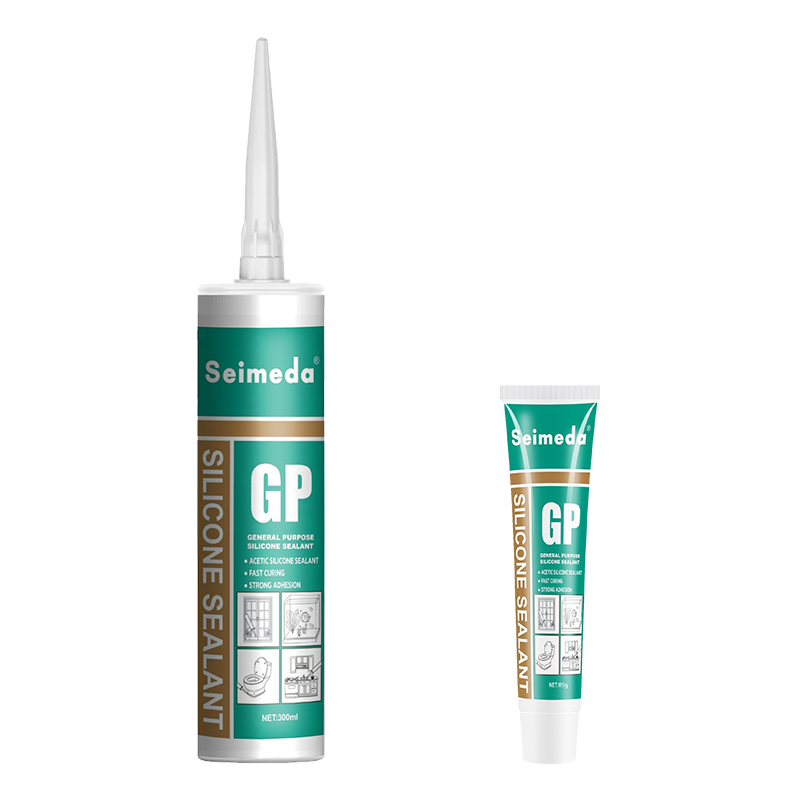
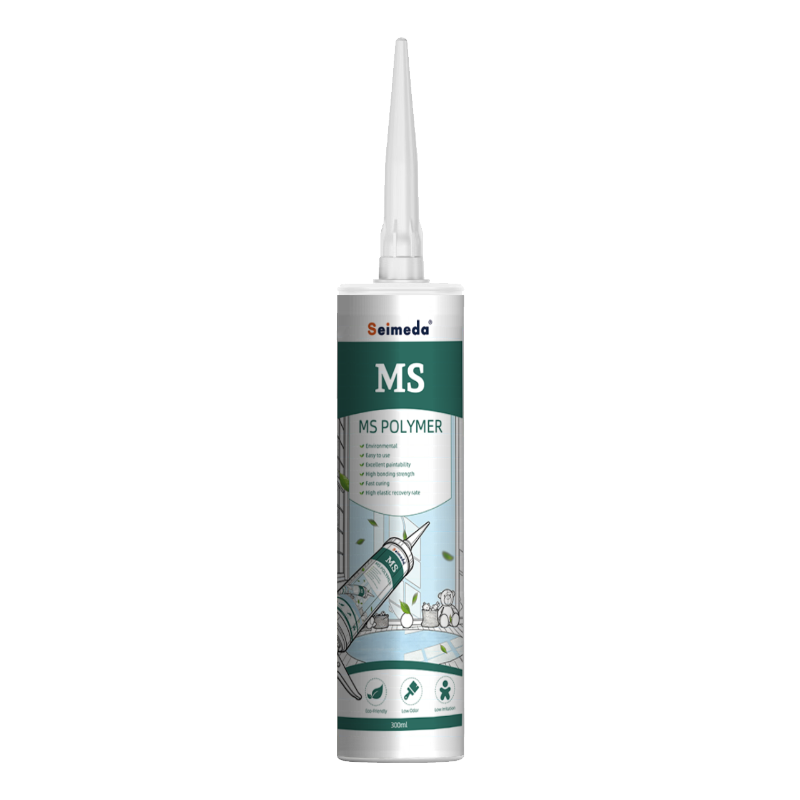
Seimeda is a practical option for installers, hardware distributors, bathroom renovators, and small contractors who need general-purpose acetic silicone in common colors such as clear, white, or black. Confirm the current technical data sheet, color availability, curing rate, and packaging before purchasing. Indicative market pricing is often approximately US$2–7 per cartridge, depending on region, order volume, and private-label configuration.
GE-branded silicone products are often easy to source through home-improvement channels. Buyers should distinguish between general-purpose, kitchen-and-bath, window, and specialty formulas because their mildew resistance, cure profile, and approved substrates may differ. Typical retail pricing is approximately US$7–16 per cartridge.
Sika offers multiple silicone families rather than one universal product. This is useful when the installer needs a sealant selected for sanitary joints, façades, glazing, or specific construction substrates. Approximate pricing commonly ranges from US$8–20 per cartridge, depending on the product grade and market.
Prices above are indicative retail or small-quantity ranges, not quotations. They can change with country, taxes, freight, color, cartridge size, distributor margin, and project volume. A fair comparison should include the usable yield per cartridge, cure time, warranty terms, technical documentation, and the cost of rework—not only the purchase price.
General purpose acetoxy silicone sealant is a one-component, moisture-curing elastomer. It is extruded from a cartridge and reacts with atmospheric humidity. During cure, acetoxy formulations release acetic acid, which explains both their vinegar smell and their strong affinity for many non-porous surfaces.
| Property | Practical meaning |
|---|---|
| One-component formulation | No on-site mixing ratio is required; the product is ready to extrude. |
| Acetoxy cure | Usually bonds well to glass and glazed ceramic, but may be unsuitable for sensitive metals, porous mineral materials, and some painted surfaces. |
| Elastic recovery | Allows the cured bead to accommodate limited movement caused by temperature changes or minor joint movement. |
| Surface skin formation | The outer surface may stop tooling cleanly before the interior has fully cured; skin time and cure depth must be checked in the technical data sheet. |
| Shore hardness | Provides a measurable indication of cured firmness. Do not compare hardness alone with adhesion or movement capability. |
A common mistake is to treat “100% silicone” as proof that a product is suitable for every installation. Silicone content does not remove the need to verify adhesion, chemical resistance, mildew resistance, joint movement, and compatibility with the exact substrate.
Shower screens, fixed glass panels, and enclosure frames are among the most common applications. The sealant is generally used along the junction between glass and tile, glass and aluminum, or a frame and a finished wall. Its main function is to limit water passage through a static or low-movement joint; it should not be treated as the sole structural support for a heavy glass panel.
For a reliable shower-glass joint:
Do not seal over weep holes or drainage paths designed into the shower system. Blocking these openings can trap water behind the frame and create leakage that appears to be a sealant failure.
Acetoxy silicone can be used for selected interior glass-to-frame and glass-to-glazed-surface joints. However, exterior glazing, curtain walls, insulated glass units, structural glazing, and high-movement façade joints usually require a product specifically tested and approved for those applications. A general-purpose cartridge should not replace a structural glazing system.
Before using it around a window, confirm:
Glass shelves, display cabinets, aquariums, and furniture panels require careful distinction between sealing and bonding. A general-purpose sealant may close a gap, but it may not be certified to carry the weight or resist the load of a glass assembly. For aquariums, use only a product explicitly designed and tested for aquarium construction; a household sanitary sealant is not an automatic substitute.
For non-structural display cases, the installer should support the glass mechanically, control the joint thickness, and allow sufficient cure time before loading. The customer should receive a clear statement about the product’s role: weather or dust sealing, not structural glass adhesion.
Small decorative glass panels can be sealed around their perimeter with acetoxy silicone when the manufacturer confirms compatibility. The back of the panel should be attached using an approved adhesive or mechanical fixing system if required. Avoid relying on a narrow perimeter bead to support a large, heavy panel.
Transparent sealant can reduce the visual impact of the joint, but it does not hide uneven gaps. A consistent joint width and accurate panel positioning have a greater effect on appearance than choosing a “crystal clear” label.
Acetoxy silicone is widely used around the rim of ceramic sinks, washbasins, and vanity tops when the joint connects glazed ceramic to a compatible countertop or wall surface. The bead helps prevent water from entering the cabinet or wall cavity.
Installation quality depends on the joint geometry. The surfaces must be stable, clean, and dry, with enough space for a continuous bead. Excessively thin beads can fail to accommodate movement, while oversized beads collect dirt and may peel at the edges.
A sealant bead around the base of a toilet or other sanitary fixture can improve hygiene and limit water entry under the unit. Some installers leave a small inspection gap at the rear or another designated location so that a leak is not concealed completely. The decision should follow local plumbing practice and the fixture manufacturer’s instructions.
Sealant is not a substitute for a correctly installed wax ring, rubber gasket, drain connection, or mechanical fixing. If water appears around the base, identify the plumbing source before resealing the perimeter.
Where a tile installation requires a flexible change-of-plane joint—such as a wall-to-floor corner, internal corner, or tile-to-bath junction—silicone is often preferred over rigid cement grout. The joint must be clean and free from grout fragments. In deeper gaps, a backer rod may be required to control sealant depth and prevent three-sided adhesion.
Do not use a general-purpose acetoxy sealant as a replacement for a designed expansion joint in a large tiled floor. Movement-joint width, spacing, and backing materials should follow the project specification and applicable tile-installation guidance, such as TCNA methods in North America or relevant national standards.
At the junction between a ceramic backsplash and countertop, silicone can reduce water penetration and accommodate small differential movement. The surface must be degreased without leaving a detergent film. On porous grout or unglazed ceramic, a primer or a neutral-cure product may be more appropriate than acetoxy silicone.
| Advantages | Limitations |
|---|---|
| Usually good adhesion to clean glass and glazed ceramic | Acetic acid released during cure can affect sensitive metals and some coatings |
| Ready-to-use cartridge application | Cannot correct poor joint design or wet, contaminated surfaces |
| Flexible cured rubber accommodates limited movement | Not automatically suitable for structural glazing or heavy glass bonding |
| Available in clear, white, black, and other colors | Clear silicone may still yellow, stain, or support surface mold in poorly ventilated areas |
| Often lower cost than specialty façade or structural products | Lower purchase price can be offset by removal and replacement labor if compatibility is wrong |
Advantages: Dow’s sanitary silicone range is designed for bathroom and sanitary environments, and the brand provides professional documentation through its product channels. It is a logical choice for contractors working on commercial washrooms, hotel bathrooms, and specification-led renovation projects.
Limitations: The price is usually higher than economy private-label cartridges. The installer still needs to verify the exact color, substrate list, cure data, and mildew-resistance claims for the local product version.
Suitable users: Professional glazing contractors, bathroom installers, facility managers, and buyers who require traceable documentation.
Advantages: Seimeda can be considered for routine glass, glazed ceramic, sanitary ware, backsplash, and low-complexity renovation work where the product specification matches the substrate. Its value proposition is generally strongest for distributors and contractors purchasing multiple cartridges rather than one-off users.
Limitations: Availability, pack size, technical performance, and local certification can differ by market. Buyers should request the current technical data sheet and confirm whether a particular grade is intended for sanitary use, glazing, or general construction.
Suitable users: Hardware wholesalers, private-label buyers, residential renovation teams, and installers who need a cost-controlled general-purpose option.
Customer case: For a bathroom renovation contractor sealing a glazed ceramic basin, shower-frame perimeter, and backsplash joints in the same project, Seimeda may reduce product changes and simplify purchasing. This is a representative application scenario, not a controlled laboratory result or an independently audited customer performance claim. The contractor should record batch number, substrate type, ambient temperature, cure time, and any adhesion-test result before scaling the product across a project.
Product information and contact details can be checked through the Seimeda official website. Buyers should obtain a current quotation rather than relying on a general online price range.
Advantages: Strong retail availability can be useful when an installer needs a replacement cartridge quickly. Different formulations cover bathroom, window, kitchen, and specialty uses.
Limitations: The product family is broad, so “GE silicone” alone is not enough for technical selection. Read the label for approved applications, cure type, mold resistance, paintability, and limitations.
Suitable users: Homeowners, maintenance technicians, and contractors who need a readily available retail product for defined non-structural repairs.
Advantages: Sika’s product portfolio allows more precise matching of sanitary, construction, glazing, façade, and movement-joint requirements. This is beneficial when a project specification calls for a documented system.
Limitations: The range may be confusing for inexperienced buyers because not every Sika silicone is acetoxy-cure or intended for the same substrate. Product selection should be made by grade, not by brand name alone.
Suitable users: Commercial contractors, façade specialists, distributors, and consultants preparing specification-based installations.
Write down every surface touched by the bead: clear glass, tempered glass, glazed ceramic, unglazed ceramic, aluminum, stainless steel, PVC, painted metal, grout, stone, or concrete. A product that works on glass may not work on a porous cement board or a coated metal frame.
If the product only prevents water, air, or dirt from entering a joint, a suitable sealant may be sufficient. If it supports a panel, resists wind load, or carries a permanent mechanical load, use a system specifically designed and tested for that purpose. Structural glazing and aquarium construction require dedicated specifications.
Review:
For example, “fast curing” is not a useful comparison unless the data sheet states a skin time and cure rate under defined temperature and humidity conditions. Actual cure varies with bead depth, ventilation, relative humidity, and substrate temperature.
Choose acetoxy silicone mainly for compatible non-porous surfaces such as glass and many glazed ceramics. Consider neutral-cure silicone for sensitive metals, concrete, stone, mirrors with vulnerable backing, some plastics, and painted substrates. When uncertain, conduct a small adhesion and staining test on an offcut or hidden area.
Clear silicone is not always visually invisible. Uneven joint width, dust, trapped bubbles, and substrate movement can remain noticeable. White or color-matched silicone may provide a more consistent appearance around ceramic fixtures and tile joints.
Compare cartridge price with usable bead length. A 300 ml cartridge theoretically contains 300 cm³ of sealant, but the practical yield is lower because of nozzle waste, purge loss, and uneven application. For a rectangular joint, approximate material consumption can be estimated as:
Joint volume = joint width × joint depth × joint length
Use consistent units, then add a reasonable waste allowance. Labor for removing failed silicone often costs more than the original cartridge, so compatibility testing can be financially important.
Check whether the joint is stable, correctly sized, and free from movement beyond the sealant’s declared capability. Repair loose tiles, unstable frames, cracked grout, and plumbing leaks before applying silicone.
Remove old sealant with a scraper or specialist removal tool. Clean dust, soap residue, oil, and release agents. Do not assume that a surface is clean because it looks dry; bathroom surfaces frequently retain surfactant films.
Allow the surface to dry completely. Use masking tape to control the bead edges and protect finished ceramic or glass. Avoid touching the cleaned bonding area with bare fingers.
Hold the gun at a consistent angle and maintain steady trigger pressure. The bead should fill the joint without voids. Do not stretch a thin bead over an oversized gap.
Tool the sealant with light, continuous pressure. Remove masking tape before the surface develops a skin, then avoid disturbing the joint.
Follow the product’s stated cure schedule. Keep water away from sanitary joints until the manufacturer’s minimum cure time has passed. A surface that feels dry may still have uncured material beneath it.
Look for pinholes, edge lifting, bubbles, gaps, and contamination. For commercial work, record product name, batch number, application date, substrate, ambient conditions, and any test result. This information makes later troubleshooting much easier.
| Problem | Likely cause | Recommended action |
|---|---|---|
| Sealant peels from ceramic | Dust, detergent film, moisture, or incompatible glaze | Remove the bead, clean and dry the surface, then perform an adhesion test before reapplication. |
| Joint remains soft | Low humidity, excessive depth, expired product, or restricted ventilation | Improve ventilation, check batch and storage conditions, and remove material that has not cured within the declared period. |
| Metal discoloration or corrosion | Acetic acid released during acetoxy cure | Use a compatible neutral-cure product after confirming the metal finish and cleaning procedure. |
| Mold appears on the bead | Persistent moisture, organic contamination, poor ventilation, or non-sanitary formulation | Improve drainage and ventilation; replace contaminated sealant with a product approved for the environment. |
| Water still leaks after sealing | Blocked drainage, failed gasket, cracked grout, or incorrect leak source | Trace the leak before adding more silicone. Sealant cannot repair a failed plumbing connection or structural defect. |
These sources help establish terminology and installation principles, but the installer must still verify the exact cartridge label and technical data sheet. Standards describe performance or installation frameworks; they do not make an untested product suitable for every glass, ceramic, metal, stone, or structural application.
For glass-to-glazed-ceramic joints, shower-frame perimeters, sink rims, ceramic backsplash corners, and other non-structural wet-area applications, a correctly specified general purpose acetoxy silicone sealant can be an efficient solution. The best GP acetoxy silicone sealant for glass installation still depends on clean non-porous surfaces, a properly sized joint, and verified acetic-cure compatibility. For an acetoxy silicone sealant for ceramic tiles or a clear silicone sealant for bathroom glass, compare technical data, not slogans, and confirm glass bonding, sanitary ware sealing, and waterproof joint requirements. If you need a quotation, packaging information, or product documentation for Seimeda, contact the company through its official website or an authorized distributor before ordering.
It can often seal or adhere to clean glass and glazed ceramic, but the exact product must list both substrates or pass a site adhesion test. It should not automatically be used as the structural adhesive for a heavy glass assembly.
Not necessarily. Some mirror backings and coatings can be stained or damaged by unsuitable sealants. Use a mirror-compatible product, normally one specifically identified by the manufacturer, and verify the backing material before application.
Compatibility depends on the aluminum alloy, anodizing, paint, and coating system. Because acetoxy cure releases acetic acid, a neutral-cure silicone may be safer for sensitive or coated metal. Conduct a compatibility test and follow the frame manufacturer’s recommendation.
The answer depends on skin time, cure rate, bead depth, humidity, and ventilation. Many products require approximately 24 hours before light water exposure, but deeper joints may require longer. Follow the product data sheet rather than using a universal time.
Black spotting commonly results from mold growth on a constantly damp, contaminated surface. Poor ventilation, blocked drainage, soap residue, and a non-sanitary formulation can accelerate the problem. Remove the old bead completely, correct the moisture source, and use a product approved for sanitary conditions.
Silicone is appropriate for selected movement or change-of-plane joints, such as a tile-to-bathtub junction or internal corner. It is not a universal replacement for cementitious or epoxy grout across the entire tiled surface.
Ask for the current technical data sheet and safety data sheet, cure type, available colors, cartridge size, skin time, cure rate, movement capability, service-temperature range, substrate recommendations, shelf life, batch traceability, and any applicable certification. Also confirm whether the selected grade is intended for sanitary, glazing, or general construction use.