



WhatsApp: +86 178 6574 8088

E-mail: jackyalum@163.com
English


WhatsApp: +86 178 6574 8088
E-mail: jackyalum@163.com
Related Products
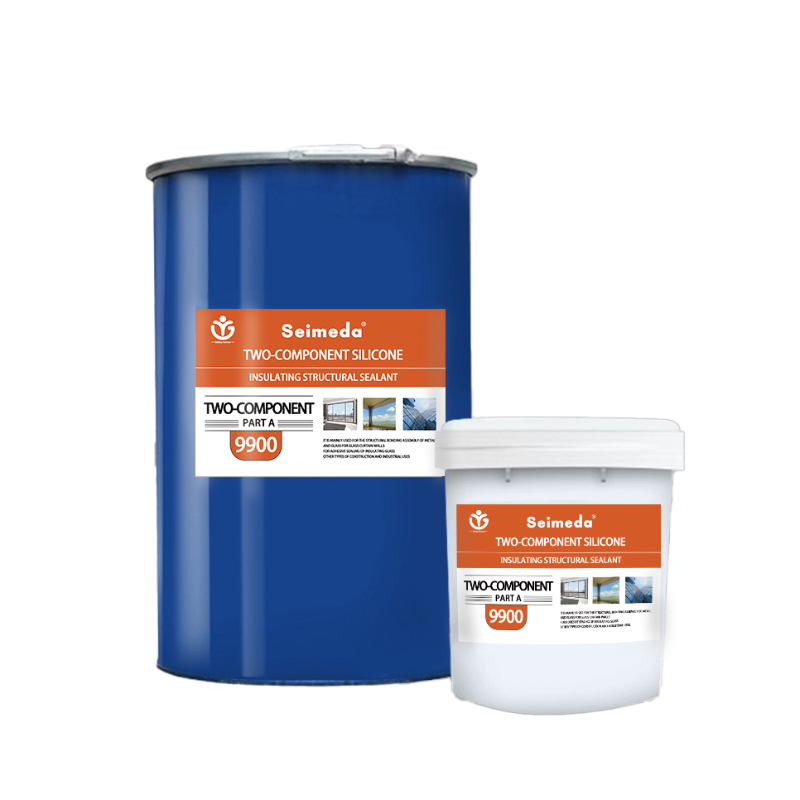
SEIMEDA manufactures Two-Component Structural Silicone Sealant for Insulating Glass Units (IGU), a neutral-curing, high-modulus silicone sealant developed for secondary edge sealing and structural insulating glass applications. As part of our construction sealants and adhesives range, this two-component insulating glass silicone sealant provides durable edge bonding, mechanical support, and weather resistance for factory-produced IGUs.
Our two-part silicone sealant is designed for use with industrial mixing and dispensing equipment, supporting consistent application in insulating glass production lines. We supply IGU secondary sealant to glass manufacturers, curtain wall fabricators, international distributors, and OEM customers, with bulk packaging and technical support.
Key advantages include:
Structural strength exceeding relevant standards by over 1.5×
Extremely low water vapor transmission rate, maintaining IGU dryness
Outstanding weather resistance with stable performance from -50°C to +150°C
Excellent adhesion to various glass types and spacer systems
It is a critical material for the safety and durability of curtain wall insulating glass systems.
Product Video
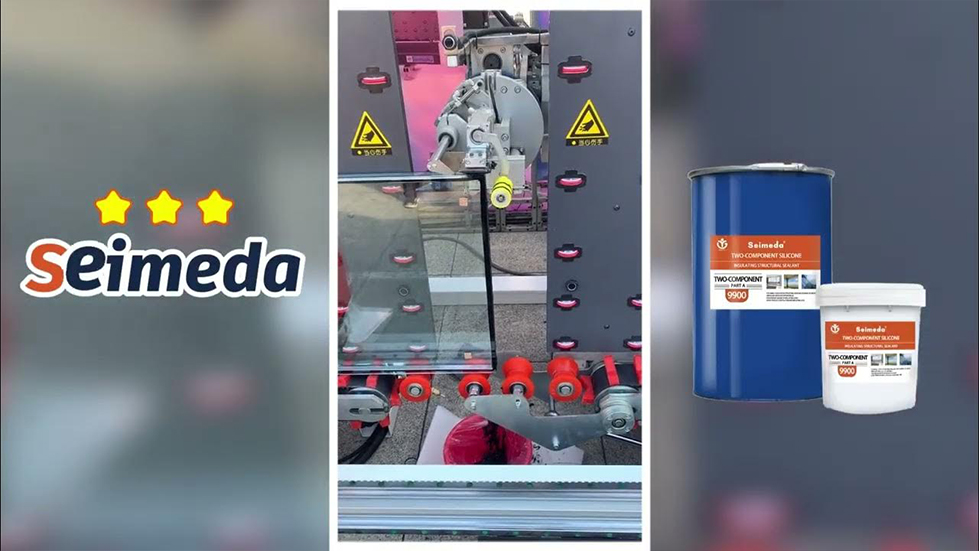
Watch our application video to see real IGU production performance.

Key Features & Basic Specifications
Key Features & Product Performance
Two-Component Neutral Curing: Component A silicone base and Component B curing agent react after mixing to form a durable silicone elastomer, supporting curing throughout the applied sealant bead.
Structural Bonding Performance: Published tensile adhesion strength ≥0.90 MPa under standard conditions, with reported results ≥0.68 MPa at 90°C, −30°C, and after water immersion and UV exposure.
High-Modulus Elasticity: Modulus at 10% elongation ≥0.15 MPa and Shore A hardness of 30–60 provide mechanical properties for selected structural IGU edge-sealing applications.
Production Line Application: Two-component IGU sealant can be applied using compatible metering, mixing, and dispensing equipment. Proper equipment calibration is necessary for consistent mixing.
Weather Resistance: The cured silicone secondary sealant is developed to withstand temperature changes and environmental exposure in insulating glass edge-sealing systems.
Insulating Glass Secondary Sealing System
SEIMEDA two-component silicone sealant is designed for the secondary sealing stage of dual-sealed insulating glass production. It works with the PIB primary sealant and spacer system to provide edge bonding, mechanical stability, and long-term protection.
| IGU Component | Function in the Sealing System |
|---|---|
| PIB / Butyl Primary Sealant | Forms the primary barrier against moisture vapor and insulating gas leakage |
| Two-Component Silicone Secondary Sealant | Provides edge bonding, mechanical support, and weather resistance |
| Spacer System | Maintains the designed glass separation and supports the edge-sealing structure |
| Desiccant | Adsorbs residual moisture inside the insulating glass cavity |
Our silicone secondary sealant is particularly suited to insulating glass manufacturing applications requiring strong edge bonding and resistance to temperature changes.
For more information about complete insulating glass sealing systems, see our Insulating Glass Sealant Solutions.
Product Advantages
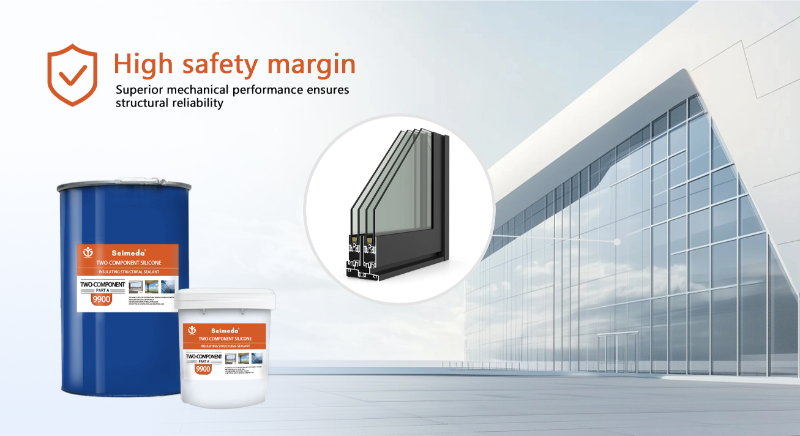
High safety margin
Superior mechanical performance ensures structural reliability

Long-term durability
Excellent weather resistance for decades of service life
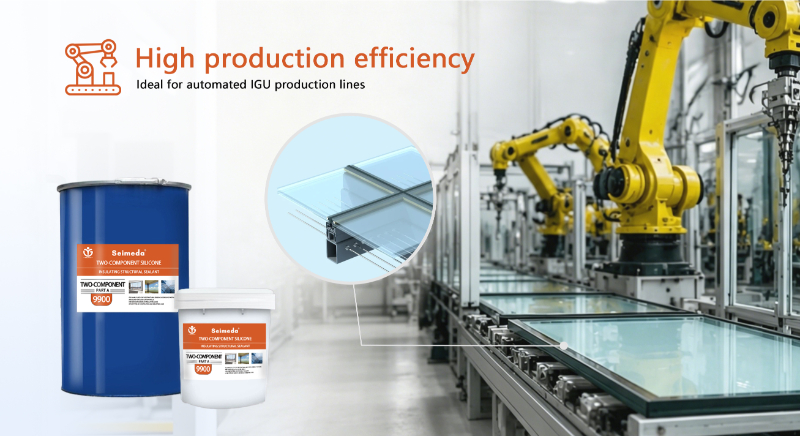
High production efficiency
Ideal for automated IGU production lines
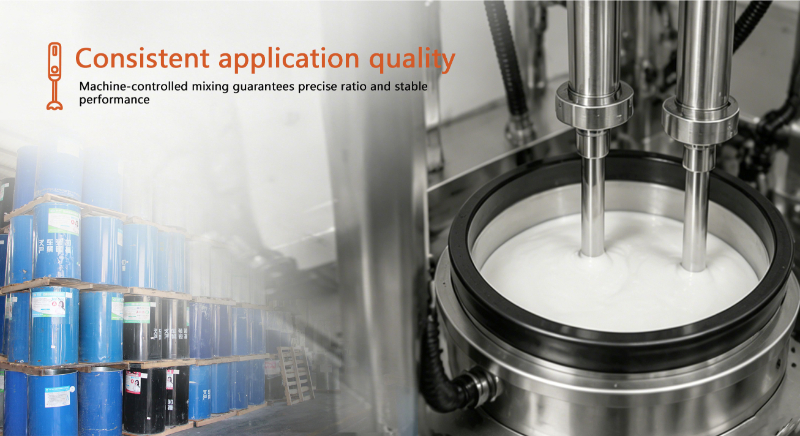
Consistent application quality
Machine-controlled mixing guarantees precise ratio and stable performance
Functions, Applications & Scope
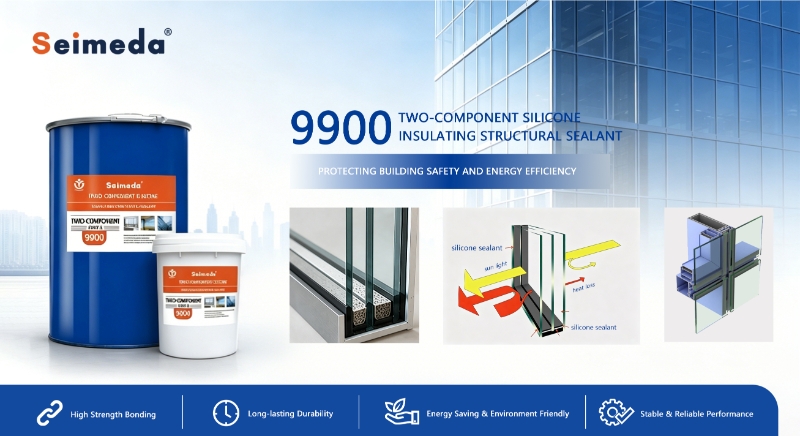
Main Function
Provides structural bonding and long-term edge sealing for IGUs, resisting self-weight, wind load and environmental stress.
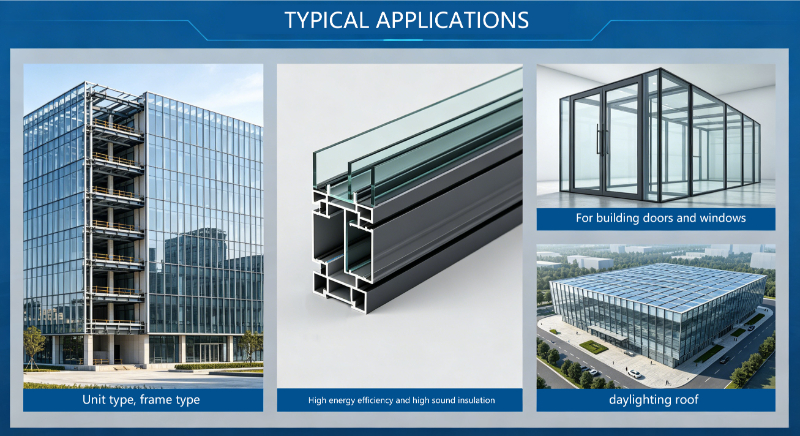
Typical Applications
Structural assembly of insulating glass units (IGU) for unitized and framed glass curtain wall systems
Insulating glass units for high energy-efficient and sound-insulating architectural windows and doors
Structural insulating glass systems for skylights, canopies, and overhead glazing
Application Notes
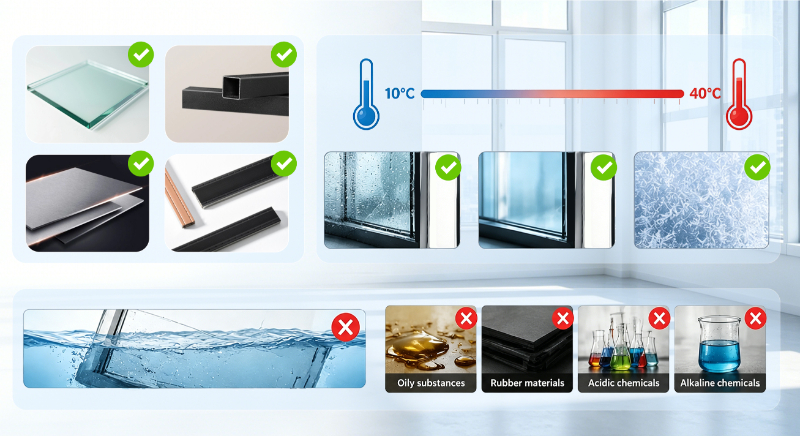
Suitable for glass, aluminum spacers, stainless steel spacers, and composite spacers
Application temperature: 10°C–40°C
Substrates must be dry, clean, and free from frost or condensation
Not suitable for continuous or long-term water immersion
Must not come into contact with oily substances, rubber materials, or acidic/alkaline chemicals
Composition
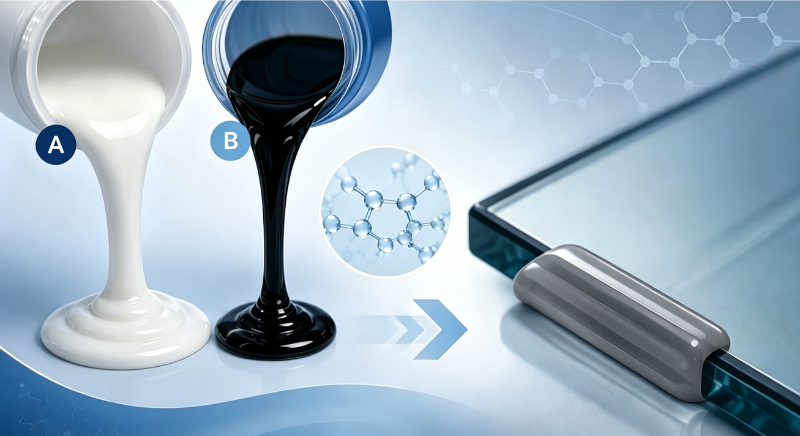
Consists of Component A (silicone polymer base) and Component B (curing agent). Neutral curing after mixing forms a durable silicone elastomer, non-corrosive to coated glass.
Technical Data Sheet
The following data are based on SEIMEDA's published specifications for its two-component structural silicone sealant for insulating glass units.
|
Performance Item |
Technical Specification |
Test Conditions & Value Description |
|
Tensile Adhesion Strength |
≥ 0.90 MPa |
Standard conditions; key indicator for structural safety |
|
Tensile Adhesion Strength (90°C) |
≥ 0.68 MPa |
High strength retention after high-temperature exposure |
|
Tensile Adhesion Strength (–30°C) |
≥ 0.68 MPa |
Maintains flexibility and bonding strength at low temperatures |
|
Tensile Adhesion Strength (Water Immersion + UV) |
≥ 0.68 MPa |
Excellent weather resistance and durability |
|
Modulus at 10% Elongation |
≥ 0.15 MPa |
High modulus, strong resistance to deformation |
|
Hardness |
30–60 Shore A |
Balanced hardness after curing |
|
Tack-Free Time |
≤ 3 hours |
Improves application efficiency |
|
Working Time |
≥ 20 minutes |
Ensures sufficient time for continuous application |
FAQ
What is the main difference between two-component and one-component sealants for insulating glass?
Two-component sealants cure independently of ambient humidity, offering faster deep curing and higher strength, ideal for production lines and large projects. One-component sealants are more suitable for on-site repair or small-volume applications.
Are there any requirements for spacer materials?
Compatible with aluminum, stainless steel, and composite spacers. Compatibility testing is recommended for new materials.
What application equipment is required?
A dedicated two-component dispensing machine with a static mixer is required, calibrated according to the recommended mixing ratio.
Is black the only available color?
Standard color is black for easy visual inspection of proper mixing. Custom colors are available upon request.
What happens if the mixing ratio is incorrect?
Incorrect mixing may result in incomplete curing, reduced strength, or tacky surfaces. Strict adherence to the specified ratio is essential.
What is the recommended application temperature?
Recommended application temperature is 10°C–40°C. Temperatures outside this range may affect curing and performance.
Is it compatible with the primary IG sealant?
Compatible with common primary sealants such as butyl rubber; compatibility testing is advised beforehand.
How long does full curing take?
Initial strength is achieved within 24–48 hours, with full performance reached in about 7 days, depending on conditions.
Is it suitable for structural insulating glass applications?
Yes. With high strength and excellent weather resistance, it is widely used in structural IG systems.
What are the storage conditions and shelf life?
Store in sealed containers in a cool, dry place away from heat and direct sunlight. Standard shelf life is 12 months.
SEIMEDA two-component structural silicone sealant serves insulating glass manufacturers producing architectural glazing units for residential, commercial, and curtain wall projects.
| Application | Typical Use | Product Benefits |
|---|---|---|
| Double-Glazed Insulating Glass | Secondary edge sealing of standard double-glazed units | Elastic bonding and durable edge sealing |
| Commercial Window IGUs | Insulating glass units for architectural windows and doors | Edge stability and resistance to temperature changes |
| Structural Curtain Wall IGUs | Secondary sealing of structural insulating glass assemblies | High-modulus bonding and weather resistance |
| Low-E Insulating Glass | Edge sealing of coated glass units with prepared bonding surfaces | Secondary edge bonding for energy-efficient glazing assemblies |
| Gas-Filled Insulating Glass | Secondary sealing in dual-sealed gas-filled IGUs | Mechanical support alongside the PIB primary barrier |
| Skylight Insulating Glass | Secondary sealing of engineered overhead glazing units | Edge bonding and resistance to environmental exposure |
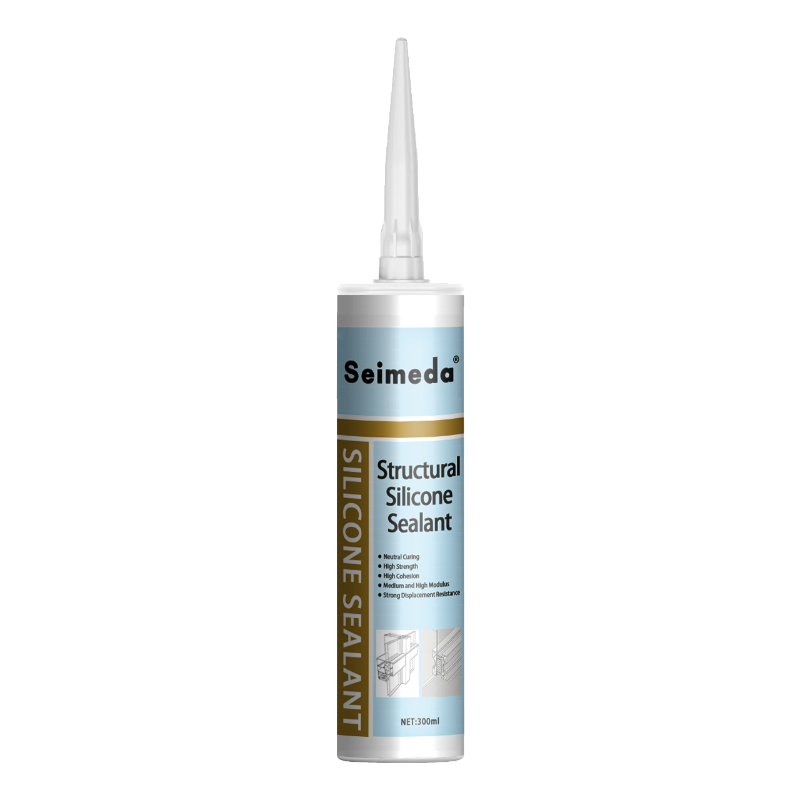
For direct structural bonding between architectural glass and supporting frames, SEIMEDA also supplies Structural Silicone Sealant.
SEIMEDA two-component IGU silicone sealant consists of Component A (silicone polymer base) and Component B (curing agent). Both components are processed through a two-component dispensing system to produce a uniform, curable silicone mixture.
| Processing Item | Product Information |
|---|---|
| Component A | Silicone polymer base |
| Component B | Curing agent |
| Mixing Method | Mechanical metering and mixing |
| A/B Mixing Ratio | Available through the grade-specific processing instructions; contact SEIMEDA |
| Working Time | ≥20 minutes |
| Tack-Free Time | ≤3 hours |
| Application Temperature | 10°C–40°C |
| Dispensing Equipment | Two-component metering and dispensing equipment with a suitable mixing system |
| Curing System | Two-component neutral cure |
The two-part silicone sealant supports controlled application on industrial IGU production lines. SEIMEDA can provide product processing information to help you match the selected sealant grade with your existing dispensing equipment.
SEIMEDA insulating glass silicone sealant is developed for use in conventional IGU edge-sealing systems incorporating glass, metal spacers, and compatible primary sealing materials.
| Material | Application in IGU Production |
|---|---|
| Float Glass | Secondary edge bonding in standard insulating glass units |
| Tempered Glass | Edge sealing of safety glazing assemblies |
| Low-E Coated Glass | Secondary sealing on properly prepared glass bonding surfaces |
| Aluminum Spacers | Conventional metal spacer edge-sealing systems |
| Stainless Steel Spacers | Metal spacer systems used in insulating glass manufacturing |
| Composite / Warm-Edge Spacers | Secondary sealing of approved alternative spacer systems |
| PIB / Butyl Primary Sealant | Primary sealing material used alongside the silicone secondary seal |
For Low-E glass, warm-edge spacers, or specialized primary sealants, send us your material specifications. Our team can review the sealing arrangement and available product compatibility information.
SEIMEDA two-component silicone sealant is designed for industrial insulating glass production lines using mechanical metering, mixing, and secondary edge dispensing equipment.
Production Line Features
Mechanical Mixing: Components A and B are combined through a controlled mixing system to produce a uniform sealant.
Continuous Edge Sealing: The mixed silicone is dispensed along the IGU perimeter to form a continuous secondary seal.
Suitable Processing Window: Working time ≥20 minutes supports mixing, dispensing, and application operations.
Factory Production: Suitable for insulating glass fabrication using compatible automated dispensing equipment.
Production Quality Control
Key production checks for two-component insulating glass sealant include:
Mixing Ratio Check: Verifies the component ratio delivered by the dispensing equipment.
Butterfly Test: Provides a visual check of mixing uniformity.
Snap Time Check: Monitors the curing response of the mixed sealant.
Adhesion Check: Assesses bonding to the glass or spacer surface.
Edge Seal Inspection: Checks seal continuity, dimensions, and application consistency.
SEIMEDA's manufacturing quality-control system includes raw-material inspection, production monitoring, finished-product testing, and batch traceability.
Application Guidelines
Surface Preparation: Apply the insulating glass silicone sealant to clean, dry glass and spacer surfaces free from oil, dust, and contamination.
Equipment Preparation: Set the dispensing equipment to the specified A/B ratio and prepare the mixing system before production.
Sealant Application: Dispense the mixed silicone continuously along the insulating glass edge at the required secondary-seal depth.
Processing Temperature: Apply within the recommended temperature range of 10°C–40°C.
Curing: Maintain suitable production conditions and allow the secondary sealant to develop the required curing strength before subsequent handling and packaging.
Application Limitations
Not intended for continuous water immersion.
Avoid application to wet or contaminated bonding surfaces.
Avoid direct contact with materials that release oils, solvents, or incompatible chemicals.
Structural IGU applications require the appropriate edge-seal design and project specification.
SEIMEDA supplies two-component insulating glass silicone sealant in bulk packaging for industrial glass processing and international wholesale distribution.
| Purchasing Item | SEIMEDA Supply Information |
|---|---|
| Component A Packaging | 190 L |
| Component B Packaging | 20 L |
| Standard Mixed Color | Black |
| Custom Colors | Available upon request |
| Shelf Life | 12 months |
| Storage | Sealed containers in a cool, dry location away from heat and direct sunlight |
| Supply Type | Industrial bulk supply |
| OEM / Private Label | Custom labeling and branding requirements can be discussed |
| MOQ | Quoted according to order and customization requirements |
| Lead Time | Provided with the order quotation |
We supply two-component IGU secondary sealant for regular manufacturing orders, distributor purchasing programs, and customized supply requirements.
For private-label and international distribution services, visit our OEM Sealant Manufacturing Services.
SEIMEDA supports insulating glass manufacturers and industrial buyers with product specifications, processing information, and supply coordination.
Product Specifications: Technical data covering tensile adhesion, modulus, hardness, working time, and application conditions.
Mixing Information: Product-specific A/B ratio and processing information for two-component dispensing equipment.
Material Selection: Technical consultation for glass types, spacer materials, primary butyl sealants, and structural IGU requirements.
Technical Documents: Applicable TDS, SDS, and available product performance reports.
Sample Supply: Product samples for production trials and material assessment, subject to order arrangements.
Bulk Order Support: Packaging, order quantity, production planning, and export delivery coordination.
Explore our Technical Support Services for additional manufacturing and product information.
Our two-component silicone sealant is designed primarily for secondary edge sealing in insulating glass units. It is used in architectural insulating glass production, including commercial glazing and structural curtain wall IGU applications.
The mixing ratio is specified in the processing instructions for the selected SEIMEDA product grade. Contact our team for the current mixing specifications and equipment information.
Yes. SEIMEDA two-component IGU sealant is designed for use with compatible industrial metering, mixing, and dispensing equipment. Share your machine configuration with us for product and processing information.
Our two-component silicone secondary sealant is developed for dual-sealed insulating glass systems using compatible PIB/butyl primary sealants. For a specific butyl formulation or alternative spacer system, our team can review the material details.
Yes. SEIMEDA offers high-modulus, two-component structural silicone sealant for structural insulating glass applications. The selected grade and edge-sealing design must meet the relevant project requirements.
The published working time is ≥20 minutes, with a tack-free time of ≤3 hours. Actual curing and handling intervals vary with the product grade and processing conditions.
Our published packaging consists of 190 L for Component A and 20 L for Component B. We offer industrial bulk supply and can discuss customized labeling and branding requirements.
Contact us for the current product TDS, SDS, mixing instructions, and available performance test documentation. We can also discuss technical requirements for insulating glass and structural glazing projects.
SEIMEDA manufactures Two-Component Structural Silicone Sealant for Insulating Glass Units for glass processors, curtain wall fabricators, industrial manufacturers, and international distributors.
We provide two-component silicone secondary sealant for factory production, bulk purchasing, and OEM supply requirements.
Tell us your insulating glass application, existing mixing equipment, preferred packaging, estimated order quantity, and delivery destination. Our team will help you select the available product options and provide technical information and a quotation.

Contact SEIMEDA for Two-Component IGU Sealant Pricing & Samples
Payment Methods
We offer flexible and secure payment methods: T/T, Alibaba Trade Assurance (Alibaba.com Pay), and company bank transfer.
Certifications & Project References
ISO 9001, CE, RoHS certified. Product quality insured by PICC
ISO9001

CE

RoHS

PICC
Why Choose Us
We are not just a manufacturer, but your long-term construction sealing solution partner, providing one-stop service from product performance to export logistics.
 Get a Quote from SEIMEDA