



WhatsApp: +86 178 6574 8088

E-mail: jackyalum@163.com
English

WhatsApp: +86 178 6574 8088
E-mail: jackyalum@163.com
Related Products
Date: 21 Aug, 2026
Choosing the best neutral silicone sealant for aluminum windows is less about the label and more about the joint, exposure, and substrate. A contractor deciding how to apply neutral cure silicone to aluminum frames must account for surface contamination, movement, curing conditions, and the risk of water entry. For an exterior project, a neutral silicone sealant for exterior window joints should provide reliable adhesion, a suitable elastic modulus, and documented joint movement capability. This guide explains where neutral silicone works well, where it can fail, and how to specify and install it correctly on aluminum window systems.
Window sealant is a small component, but it controls several large risks: rain penetration, air leakage, glass movement, frame corrosion caused by incompatible materials, and costly remedial work. A sealant that performs well on an interior trim joint may not be suitable for a sun-exposed curtain wall or an insulated-glass perimeter seal.
The correct evaluation should connect the sealant to the complete window assembly rather than judging it by appearance or price alone. Check the following information in the product technical data sheet (TDS) and safety data sheet (SDS):
Acetoxy silicone releases acetic acid while curing, which is responsible for its characteristic vinegar-like odor. Neutral-cure silicone uses a different curing reaction and generally avoids that acidic by-product. This can reduce the risk of acid-related staining or corrosion on sensitive materials, although it does not make every neutral product automatically compatible with every aluminum finish.
Aluminum itself forms a protective oxide layer, and many anodized or powder-coated window profiles are compatible with neutral silicone. However, damage to the coating, exposed dissimilar metals, trapped moisture, salts, or contamination can still create corrosion problems. A small adhesion and compatibility test on the production finish remains necessary.
Aluminum expands and contracts with temperature changes, while glass, masonry, and coatings respond differently. A cured silicone sealant remains flexible instead of becoming a rigid cement-like joint. This is useful for perimeter weather seals and frame-to-substrate joints where movement is expected.
For context, aluminum has a coefficient of thermal expansion of approximately 23 × 10-6/°C. A 2-meter aluminum frame exposed to a 50°C temperature change could theoretically change length by about 2.3 mm, before considering installation tolerances and structural movement. The sealant joint must be designed to accommodate the combined movement rather than simply filled with a thick bead.
Many architectural silicone products advertise movement capability near ±25%, but the figure applies only when the joint width, depth, adhesion, geometry, and installation conditions meet the manufacturer’s requirements. A sealant rated for movement should not be used to compensate for an incorrectly sized or poorly bonded joint.
Silicone polymers generally have strong resistance to ultraviolet exposure and temperature cycling compared with many organic sealant chemistries. This makes them suitable for exposed window perimeters when the specific product is rated for exterior use.
Typical technical data sheets for architectural neutral-cure silicones may state a service temperature range around −50°C to +150°C, a skin-forming time of roughly 10–30 minutes, and a cure rate of approximately 2–3 mm per 24 hours at 23°C and 50% relative humidity. These figures vary by formulation, bead size, humidity, and temperature. They are reference ranges, not guaranteed site results.
Neutral silicone can bond to glass, anodized aluminum, painted aluminum, powder-coated profiles, and some masonry materials. The result depends on the surface energy, coating chemistry, cleanliness, and product formulation.
Powder coating is not a single universal substrate. Polyester, fluoropolymer, and other coating systems can differ in surface adhesion. A sealant that bonds to one powder-coated profile may show weaker adhesion to another. For this reason, professional installers should test the actual aluminum profile, not a generic piece of metal.
Silicone sealants typically cure through a moisture reaction and form an elastomer with low volumetric shrinkage compared with some solvent-containing products. Lower shrinkage helps reduce visible gaps at the edge of a properly tooled joint.
Low shrinkage does not correct poor tooling, insufficient sealant depth, movement at the bond line, or contamination. The joint still needs correct width-to-depth design, clean bond faces, and a suitable backer material where required.
Neutral-cure silicone often costs more per cartridge than acetoxy silicone, acrylic, or some hybrid polymer products. The relevant comparison is not cartridge price alone. Include labor, masking, primer, access equipment, warranty requirements, and the cost of removing failed sealant.
A lower-priced product may be reasonable for a protected interior trim joint, but an exterior window perimeter exposed to wind-driven rain usually needs a product with documented weathering and movement performance. The specification should match the consequence of failure.
Neutral silicone cures when atmospheric moisture reaches the uncured material. A thin surface skin may form within minutes, while the interior of a deep bead cures more slowly. At a reference cure rate of 2–3 mm per 24 hours, a thick joint may require several days before the center reaches useful strength.
Cold, dry conditions slow curing. Excessive depth, sealed cavities, and low ventilation can slow it further. Do not expose a freshly sealed window to water, pressure washing, or movement until the product’s stated cure and weather limitations have been met.
Dust, cutting oil, silicone residue, oxidation, wax, release agents, and moisture can reduce adhesion. Aluminum profiles may also carry protective films or fabrication lubricants that are invisible after removal.
Recommended preparation normally includes:
Solvent selection matters. Some cleaners can soften powder coatings, attack gaskets, or leave residues. Never assume that acetone, alcohol, or a strong industrial solvent is safe for every coated aluminum profile.
Most cured silicone sealants have low surface energy, so ordinary architectural paints generally do not adhere reliably. If the window frame or adjacent wall will be painted, plan the finish sequence before applying silicone. Use a paintable sealant where paintability is essential, or mask and tool the silicone so it remains outside the painted area.
Window systems may contain EPDM, neoprene, silicone gaskets, glazing tapes, setting blocks, insulating-glass edge seals, membranes, and liquid-applied coatings. Plasticizers or additives from one material can migrate into another and cause softening, discoloration, loss of adhesion, or staining.
Compatibility should be verified through the sealant manufacturer, the window-system manufacturer, and practical testing. A statement that a product “sticks to aluminum” does not confirm compatibility with the complete assembly.
Neutral cure does not mean odor-free. Oxime-cure products may release an odor during curing, while alkoxy systems are often described as lower-odor. Odor intensity depends on the formulation, ventilation, temperature, and bead size. Follow the SDS, provide ventilation, and observe occupational exposure requirements.
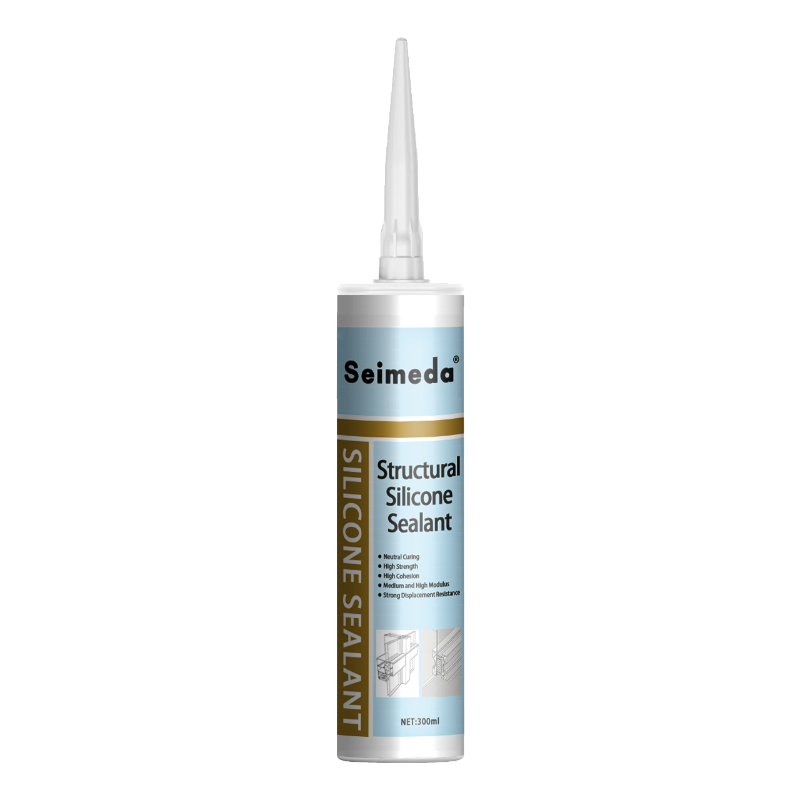
Whether you are comparing Seimeda with another neutral cure silicone sealant manufacturer, request product-specific evidence rather than relying on marketing adjectives. The following checklist helps separate a suitable façade sealant from a general-purpose product:
| Evaluation item | What to check | Why it matters |
|---|---|---|
| Movement capability | Published percentage and test method | Confirms whether the product can accommodate expected joint movement |
| Tack-free or skin time | Measured time at stated temperature and humidity | Helps plan tooling and protect the joint from rain or dust |
| Through-cure rate | Millimeters per 24 hours under stated conditions | Indicates how long deep beads may need before loading |
| Hardness and modulus | Shore hardness and tensile data where relevant | Helps match the sealant to the movement and joint geometry |
| Substrate adhesion | Test results on the actual aluminum finish | Generic aluminum data may not represent coated or anodized profiles |
| Compatibility | Written confirmation or test results for gaskets and adjacent materials | Reduces the risk of hidden assembly failures |
| Compliance | Applicable ASTM, ISO, EN, or local approvals | Supports project specifications and warranty documentation |
Confirm that the joint is structurally sound, free of standing water, and wide enough for the expected movement. Do not use sealant as a substitute for missing fasteners, damaged flashing, failed drainage paths, or incorrectly installed glazing blocks.
For movement joints, use a backer rod or bond-breaker arrangement when specified. The goal is generally two-sided adhesion rather than three-sided adhesion, because three-sided bonding can concentrate stress and restrict movement.
Cut and pull out failed sealant without gouging the aluminum coating or glass. Remove thin residue mechanically where possible, then clean according to the new product’s instructions. A new silicone bead applied over old cured silicone often has unreliable adhesion unless the manufacturer specifically approves the system.
Make sure the substrate is clean, dry, and within the manufacturer’s recommended temperature range. Mask adjacent glass, coating, stone, or wall finishes to control the bead width and reduce cleanup.
Apply a short test bead to the actual frame finish and allow it to cure for the time specified by the manufacturer. A simple cured pull test can reveal cohesive failure within the sealant or adhesive failure at the substrate. Record the substrate, cleaner, primer, batch, temperature, humidity, and result.
Cut the nozzle to the required joint size and apply continuous pressure while moving at a steady speed. Fill the joint completely. Voids, bubbles, and discontinuities can create leak paths that are not visible after tooling.
Tool the bead within the product’s stated working time. Use a compatible tooling method and avoid adding excessive water or household detergent unless the manufacturer permits it. Contaminated tooling liquid can affect the surface or adjacent coatings.
Remove masking before the sealant develops a strong surface skin. Keep the joint free from rain, dust, vibration, and contact until the product has cured adequately. Document the installation for quality control and warranty purposes.
Neutral silicone is usually worth considering when the window joint is exposed to weather, requires long-term elasticity, and includes aluminum finishes or adjacent materials that may be sensitive to acidic cure by-products. Its value increases when the product has documented movement performance, exterior weathering resistance, and tested adhesion to the exact profile.
It may not be the best choice for every location. A paintable hybrid or acrylic sealant may be more practical for a protected interior trim joint. A structural glazing application requires a product and installation method specifically approved for structural use; ordinary perimeter sealant must not be substituted.
The decision should be based on the total assembly cost and risk. Compare the product data, installation method, substrate test, expected exposure, and warranty conditions—not only the cartridge price.
It can often be used on aluminum, anodized aluminum, and coated aluminum, but direct application should not be assumed. Clean the substrate, follow the TDS, and complete an adhesion test on the actual profile and finish.
Neutral silicone is often preferred where acidic cure by-products could create compatibility or corrosion concerns. However, performance depends on the complete formulation. Acetoxy silicone may still be suitable for some glass and non-sensitive applications, but the product data must support the intended substrate.
Many products skin in approximately 10–30 minutes and cure at roughly 2–3 mm per 24 hours under laboratory reference conditions. A deep bead, low humidity, low temperature, or poor ventilation can extend the cure time. Follow the exact product data sheet.
It can repair a failed perimeter seal when the leak originates at that joint and the underlying drainage and flashing are sound. It will not correct blocked weep holes, failed glazing, loose fasteners, damaged flashing, or water entering from a higher part of the wall.
Use primer only when required by the manufacturer or confirmed by testing. Some finishes bond without primer, while others show improved or necessary adhesion with a specified primer. An unsuitable primer can damage a coating or reduce adhesion.
Most cured silicone is not reliably paintable with conventional architectural paint. If a painted joint is required, select a product specifically designed and tested for paintability, or design the sealant location so it remains unpainted.
No. Neutral cure may reduce the acid-related risk associated with acetoxy products, but corrosion can still result from damaged coatings, trapped water, salts, dissimilar metals, or poor joint design. Drainage and substrate compatibility remain essential.
Compare the exact product codes, TDS and SDS documents, movement rating, cure data, adhesion results, compatibility statements, applicable standards, shelf life, and technical support. Do not compare manufacturers by brand reputation alone or assume that all products in one brand have identical performance.
For the best neutral silicone sealant for aluminum windows, verify how to apply neutral cure silicone to aluminum frames against the product instructions and use a tested neutral silicone sealant for exterior window joints. The decisive factors are documented adhesion, an appropriate elastic modulus, and sufficient joint movement capability for the real installation—not a generic claim of superior performance.