



WhatsApp: +86 178 6574 8088

E-mail: jackyalum@163.com
English


WhatsApp: +86 178 6574 8088
E-mail: jackyalum@163.com
Related Products
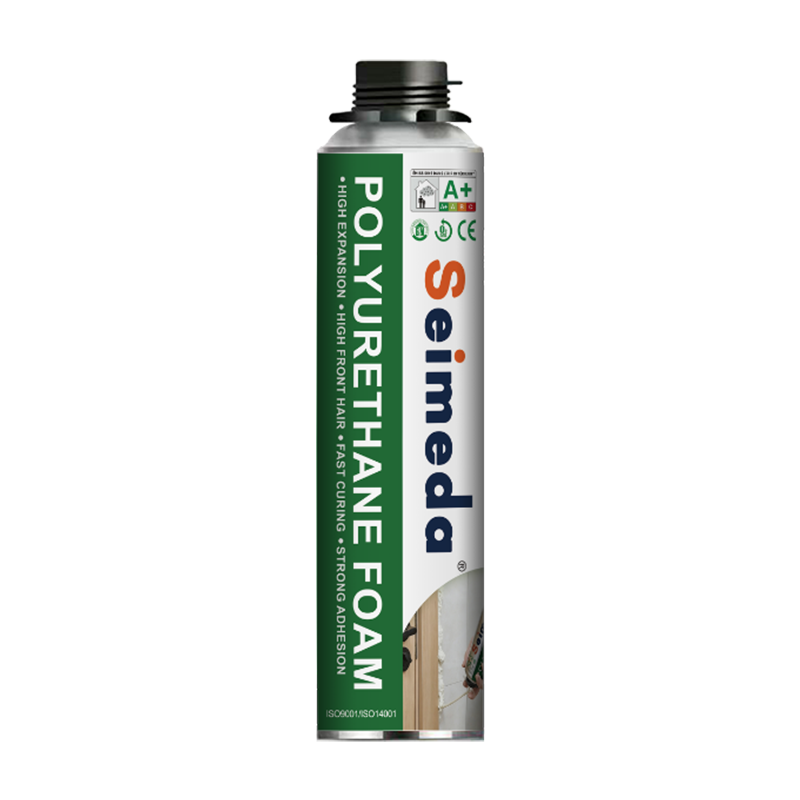
SEIMEDA PU Foam is a one-component, moisture-curing polyurethane expanding foam developed for window and door installation, construction gap filling, fixing, air sealing and auxiliary thermal and acoustic insulation.
After dispensing, the foam expands to fill irregular cavities and cures into a lightweight cellular structure. It adheres to many common construction materials, including concrete, brick, masonry, wood, PVC and clean metal surfaces.
This product is intended for filling and insulating non-structural installation gaps. It does not replace mechanical fixing, exterior weatherproof sealant, certified fire-stopping materials or large-area spray foam insulation systems.
Product Video
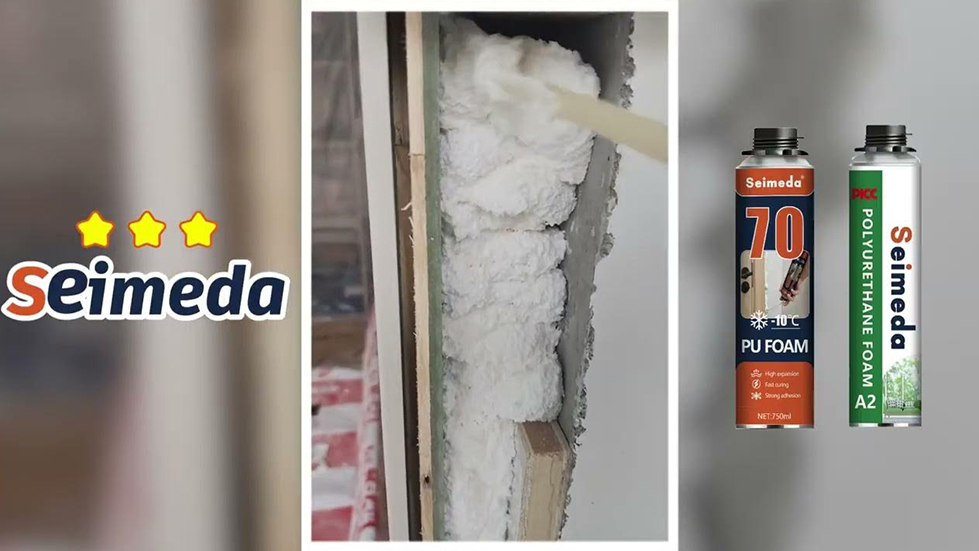
Watch the product video to review foam dispensing, expansion, gap filling and trimming performance. Actual foam yield and curing behavior depend on can temperature, ambient temperature, humidity, joint dimensions and application method.

Key Features & Basic Parameters
Key Features & Basic Parameters
SEIMEDA Polyurethane Expanding Foam is supplied in a pressurized aerosol can and is applied with a professional foam gun or another approved dispensing system, depending on the available product format.
The foam reacts with moisture in the air and on the substrate. During application, it expands into the surrounding cavity and then cures to form a rigid-to-semi-rigid cellular filling material.
Its main functions include:
PU foam is different from polyurethane sealant and neutral silicone sealant. PU foam fills larger cavities, while PU or silicone sealants form controlled surface joints for weather, water and movement resistance.
The product is ready to use without mixing separate components. Moisture in the air and on the substrate supports expansion and curing.
The expanding foam fills irregular gaps that are difficult to seal with conventional cartridge sealants. The current standard product information indicates a free-foaming yield of approximately 35–45 liters per can under specified test conditions.
Gun-grade application allows installers to regulate foam output and apply the material more accurately around window frames, door frames, pipes and construction cavities.
The current product information indicates shrinkage below 5% under the stated test conditions, helping the cured foam maintain more stable contact with surrounding materials.
The cured cellular structure helps reduce air movement, thermal transfer and sound transmission through gaps. The current reference thermal conductivity is approximately 40 mW/(m·K), subject to confirmation in the latest Technical Data Sheet.
The product can adhere to many clean construction substrates, including concrete, brick, wood, PVC and metal. Adhesion should be tested on coated, treated or unusual surfaces before use.
After complete curing, the current standard product information indicates a service temperature range of approximately -40°C to +90°C. This is different from the permitted temperature during application.
PU foam can fill the irregular cavity between a mechanically fixed frame and the surrounding wall, helping reduce drafts, improve insulation and support a more complete installation system.
The expanding material can fill cavities more quickly than manually placing multiple layers of traditional filling materials.
When applied continuously and protected correctly, the cured foam helps close air paths around frames, penetrations and construction openings.
Excess foam can be cut after sufficient curing, allowing the installer to prepare the joint for plastering, cladding or application of a protective surface sealant.
The product is suitable for window and door installers, construction contractors, hardware wholesalers, building material distributors and project buyers requiring regular bulk supply.
Different installation conditions may require different PU foam formulations. Buyers should confirm which grades are currently available before ordering.
| PU Foam Type | Recommended Application | Main Purchasing Consideration |
|---|---|---|
| General Purpose PU Foam | General construction gaps, holes and cavities | Foam yield, curing time, density and shrinkage |
| Gun Grade PU Foam | Professional window, door and construction installation | Output control, gun compatibility and repeated application |
| Straw Grade PU Foam | Small repairs, retail channels and one-time use | Ease of use and dispensing accuracy |
| Low-Expansion Window and Door Foam | Installation around PVC, aluminum and wood frames | Post-expansion and risk of frame deformation |
| Winter Grade PU Foam | Application in lower ambient temperatures | Minimum application temperature and required can temperature |
| Fire-Rated PU Foam | Applications requiring tested reaction-to-fire performance | Exact fire class, test standard and certification scope |
The standard page product should not be described as winter-grade, low-expansion or fire-rated unless the corresponding formulation and test report are available.
Product Advantage
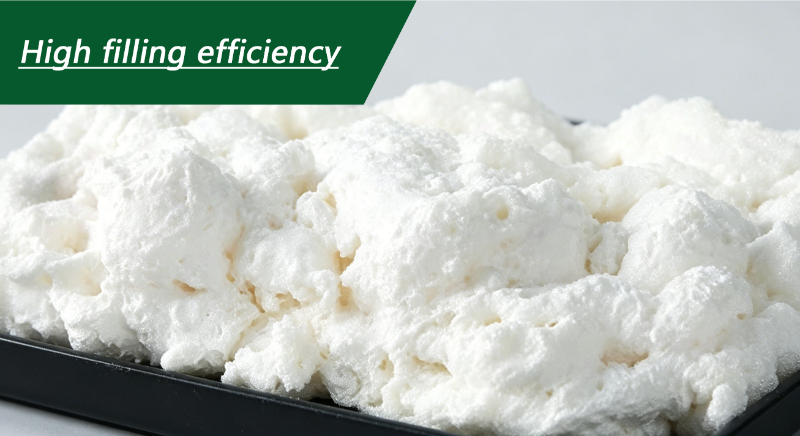
High filling efficiency
High expansion yield reduces material consumption and overall project cost
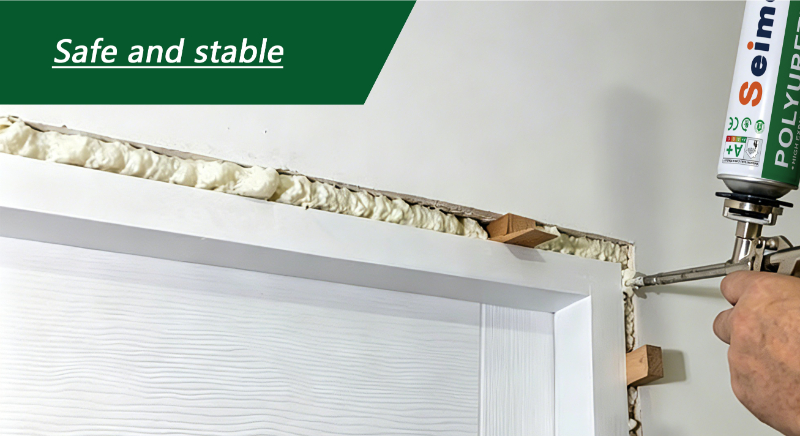
Safe and stable
Low shrinkage, no post-expansion stress on installed components
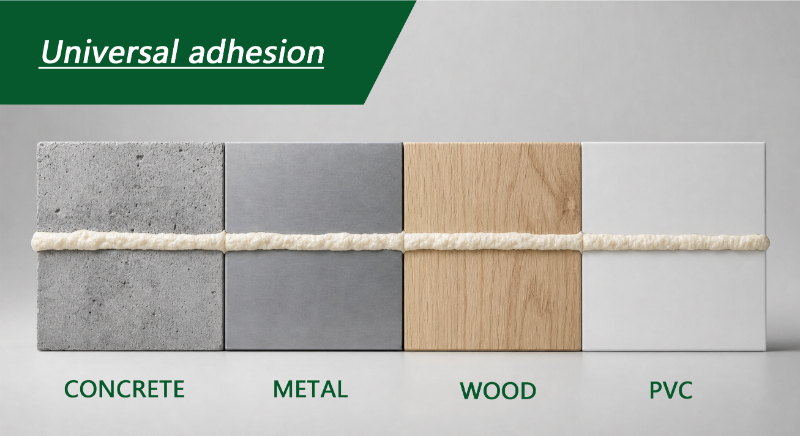
Universal adhesion
Excellent bonding to concrete, metal, wood, PVC, and most building substrates
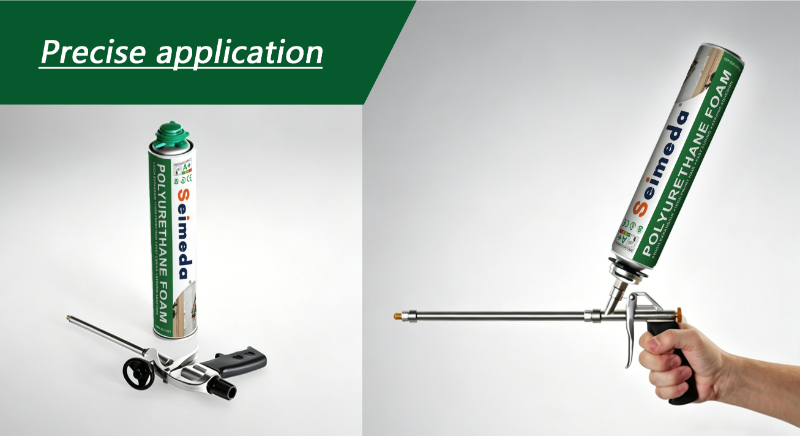
Precise application
Gun-grade formulation ensures smooth flow and accurate control
Main Functions & Applications
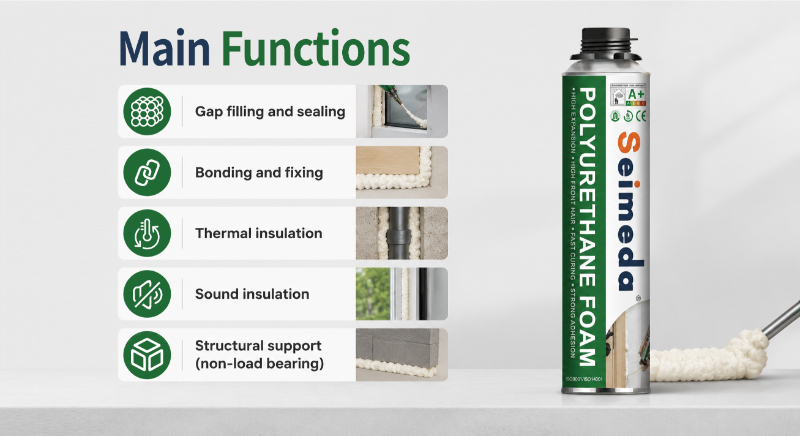
Main Functions
•Window frame installation gaps
•Door frame installation gaps
•Gaps between frames and concrete or masonry walls
•Pipe and cable penetrations
•General holes and cavities in walls
•Gaps around utility lines
•Interior air sealing
•Auxiliary thermal insulation
•Auxiliary acoustic insulation
•Filling cavities around compatible non-load-bearing components
For a complete installation system, review the door and window sealing application guide.
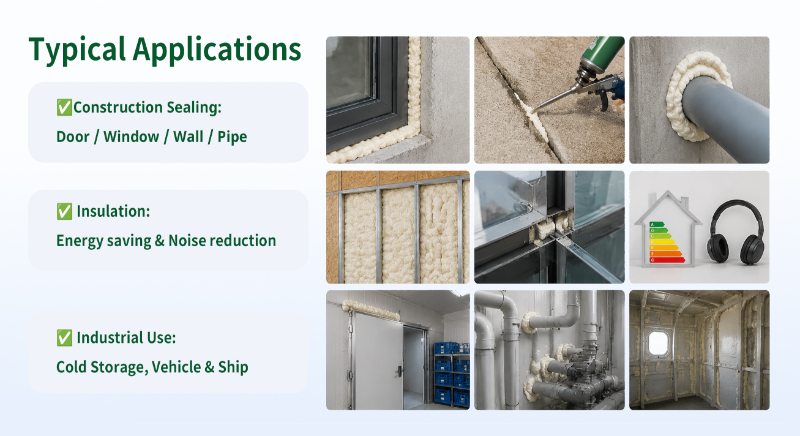
Typical Applications
(1)Construction & Installation
Filling and fixing gaps between window/door subframes and wall structures
Sealing cracks and openings in exterior walls, roofs, and floor slabs
Waterproof sealing of pipe penetrations through walls
(2)Thermal & Acoustic Insulation
Filling wall cavities and curtain wall interlayers
Improving overall building energy efficiency and sound insulation performance
(3) Industrial Applications
Sealing gaps in cold storage facilities and equipment rooms
Interior sound insulation filling for ships and vehicles
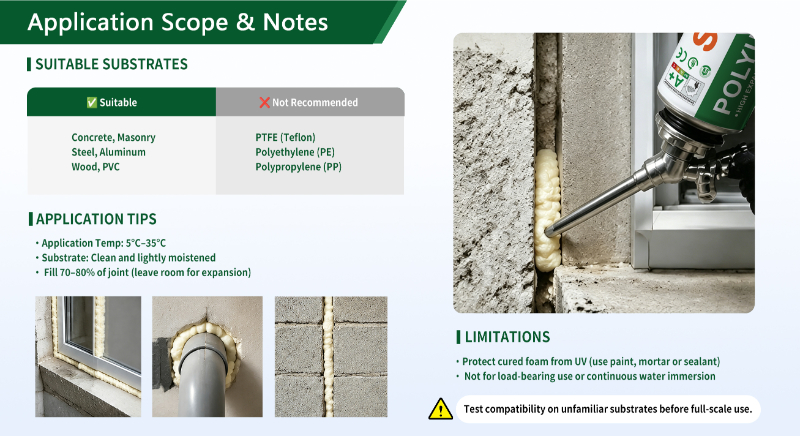
Application Scope & Notes
|
Suitable Substrates |
Not Recommended Substrates |
|
Concrete, Masonry |
PTFE (Teflon) |
|
Steel, Aluminum |
Polyethylene (PE) |
|
Wood, PVC |
Polypropylene (PP) |
Application Tips
Application temperature: 5°C–35°C
Substrate surfaces must be clean and lightly moistened with water
Fill only 70%–80% of the joint, allowing space for foam expansion
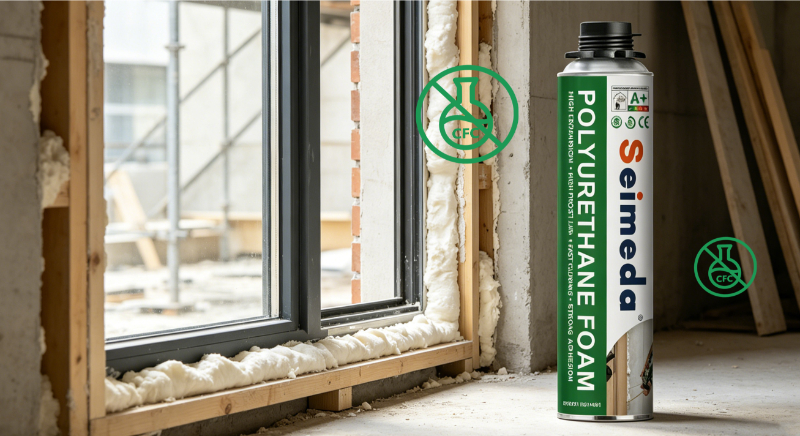
Limitations & Composition & Materials
Limitations
After curing, the foam must be protected with paint, cement mortar, or weather-resistant sealant to prevent UV degradation
Not suitable for load-bearing structural applications or areas subject to continuous water immersion
For exposed exterior joints, cover the cured foam with a suitable neutral silicone sealant, weather-resistant sealant, plaster, trim or another compatible protective material.
Composition & Materials
One-component polyurethane prepolymer system using environmentally friendly hydrocarbon propellants, CFC-free.
Technical Data
|
Performance Parameter |
Value |
Application Benefit |
|
Foam Yield |
35–45 L / can |
Determines filling efficiency and material consumption cost |
|
Tack-Free Time |
~10 min |
Improves application speed |
|
Shrinkage (after curing) |
< 5% |
Prevents sealing failure |
|
Density (cured) |
12–20 kg/m³ |
Lightweight, reduces structural load |
|
Thermal Conductivity |
~40 mW/(m·K) |
Quantified indicator of thermal insulation performance |
|
Temperature Resistance Range |
-40°C to +90°C |
Suitable for multiple climate conditions |
|
Tensile Strength (Aluminum) |
~115 kPa |
Indicator of reliable adhesion strength |
FAQ
What is the normal temperature range for PU foam application?
Normal application temperature is generally 5–35°C, with 15–25°C being the optimal range.
What are the benefits of applying PU foam at normal temperature?
Foam expansion is more complete, cell structure is more uniform, and adhesion performance is more stable.
How fast does PU foam cure at normal temperature?
Tack-free time is typically 8–12 minutes, and full curing takes around 24 hours, depending on humidity and joint depth.
Is pre-conditioning of the can required at normal temperature?
If the product is stored at 15–25°C, it can be used directly. If stored colder, pre-warming is recommended.
Is foam yield more stable at normal temperature?
Yes. Chemical reactions proceed more efficiently, resulting in foam yield closer to the rated value.
How does normal temperature affect shrinkage?
Proper curing temperature helps maintain stable cell structure and reduces shrinkage risk.
Is additional water spraying needed at normal temperature?
Light misting is helpful in low-humidity environments; it may not be necessary when humidity is sufficient.
What should be considered regarding substrates at normal temperature?
Substrates should be clean, free of oil and dust, and not excessively cold or covered with condensation.
How stable is PU foam after curing at normal temperature?
Dimensional stability is good, with lower risk of powdering or brittleness over time.
Why is normal temperature recommended for critical applications?
Normal temperature ensures the most predictable performance and minimizes application risks.
PU foam adhesion depends on surface strength, cleanliness, moisture, coating and material formulation. Test representative substrates before project use.
| Substrate | General Suitability | Application Note |
| Concrete | Generally suitable | Remove dust and lightly moisten when appropriate |
| Brick and masonry | Generally suitable | Remove loose particles before application |
| Wood | Generally suitable | Check moisture content and surface coating |
| PVC | Generally suitable after testing | Clean the profile and confirm adhesion |
| Steel | Generally suitable | Remove oil, rust and loose coating |
| Aluminum | Generally suitable | Test anodized or powder-coated finishes |
| Gypsum Board | Surface-dependent | Avoid weak, dusty or damaged paper surfaces |
| Glass | Limited use | Do not use as the main weather or glazing seal |
| PE | Not recommended | Low surface energy causes poor adhesion |
| PP | Not recommended | Special surface treatment may be required |
| PTFE | Not recommended | Use another approved fixing or sealing method |
| Silicone Surface | Not recommended | PU foam generally adheres poorly to cured silicone |
| Wet or Frozen Surface | Not recommended | Excess water or ice reduces adhesion and curing consistency |
SEIMEDA PU Foam is formulated with polyurethane prepolymers, propellant gases, catalysts and performance additives. The material is packaged in a pressurized aerosol can.
The exact formulation, propellant system and regulatory information should be confirmed in the current Safety Data Sheet.
The stated 35–45 L yield should be understood as a free-foaming laboratory reference, not a guaranteed installed volume for every joint.
Actual coverage is influenced by:
| Joint Size | Reference Coverage | Required Verification |
|---|---|---|
| 10 × 20 mm | Complete with tested linear-meter data | Confirm under actual installation conditions |
| 20 × 30 mm | Complete with tested linear-meter data | Allow for expansion and trimming |
| 30 × 50 mm | Complete with tested linear-meter data | Large gaps may require layered application |
For accurate project consumption estimates, provide the joint dimensions, total installation length and required filling percentage.
| Comparison Item | Gun Grade PU Foam | Straw Grade PU Foam |
| Primary User | Professional installers and contractors | Retail users and small maintenance projects |
| Application Control | More precise and adjustable | More limited output control |
| Repeated Use | Possible with correct gun cleaning and storage | Normally intended for shorter or one-time use |
| Installation Speed | Suitable for continuous professional work | Suitable for small-volume application |
| Additional Equipment | Requires a compatible foam gun | Uses the supplied straw applicator |
| Typical Market | Window, door and construction contractors | Hardware retail and home maintenance |
Confirm whether the current SEIMEDA product is supplied only as gun grade or whether straw-grade versions are also available.
| Comparison Item | PU Foam | PU Sealant |
| Main Function | Expanding gap filling and insulation | Elastic joint sealing and bonding |
| Cured Structure | Lightweight cellular foam | Dense elastic material |
| Typical Joint | Large irregular cavities | Controlled-width surface joints |
| Movement Capability | Not intended as a dynamic exterior joint seal | Designed for movement according to product grade |
| Exterior Exposure | Requires protection from UV and weather | Some grades are suitable for exterior exposure |
| Typical Applications | Frames, penetrations, voids and insulation gaps | Concrete, metal, automotive and construction joints |
For flexible surface joints, review the PU Polyurethane Sealant page.
PU foam and silicone sealant perform different but complementary functions in a window or door installation system.
PU foam should not replace mechanical anchors or the final exterior weather seal.
Install, align and secure the window or door frame with the specified mechanical fasteners before applying PU foam.
Remove dust, loose particles, oil and debris. Lightly moisten compatible mineral surfaces when recommended, but do not apply over standing water or ice.
Condition the can to the recommended temperature and shake it thoroughly according to the product instructions.
Connect the can to a compatible professional foam gun. Adjust the output before filling the installation gap.
Apply the foam from the bottom upward. A typical initial filling level may be approximately 60%–80% of the cavity, but the correct amount must be based on the actual expansion rate of the selected product.
Large or deep cavities may require multiple layers. Allow sufficient curing between layers and lightly moisten where recommended.
Wait until the foam has reached the specified cutting time before trimming. Do not assume that the center of a deep joint is fully cured at the same time as the surface.
Cut away excess cured foam without damaging the window frame, wall or surrounding waterproofing system.
Cover exposed foam with plaster, trim, coating or a compatible weather-resistant sealant. For the outer window joint, consider neutral silicone sealant selected for the substrate and climate.
Check that the foam is continuous, fully cured and protected, and that the frame remains correctly aligned without deformation.
Construction distributors and project buyers may require product, safety and transport documents before approving a PU foam order.
Available information can include:
Company management certificates, product test reports and transport documents should be presented separately. Confirm that each document applies to the exact PU foam model being purchased.
To receive an accurate product recommendation and quotation, provide:
Request Technical Data, Samples and Pricing
For other construction sealing materials, browse all SEIMEDA sealants, adhesives and PU foam products or use the product selection guide.
Payment Methods
We offer flexible and secure payment methods: T/T, Alibaba Trade Assurance (Alibaba.com Pay), and company bank transfer.
Certifications & Project References
ISO 9001, CE, RoHS certified. Product quality insured by PICC

ISO9001

CE

RoHS

PICC
Why Choose Us
We are not just a manufacturer, but your long-term construction sealing solution partner, providing one-stop service from product performance to export logistics.
 Get a Quote from SEIMEDA